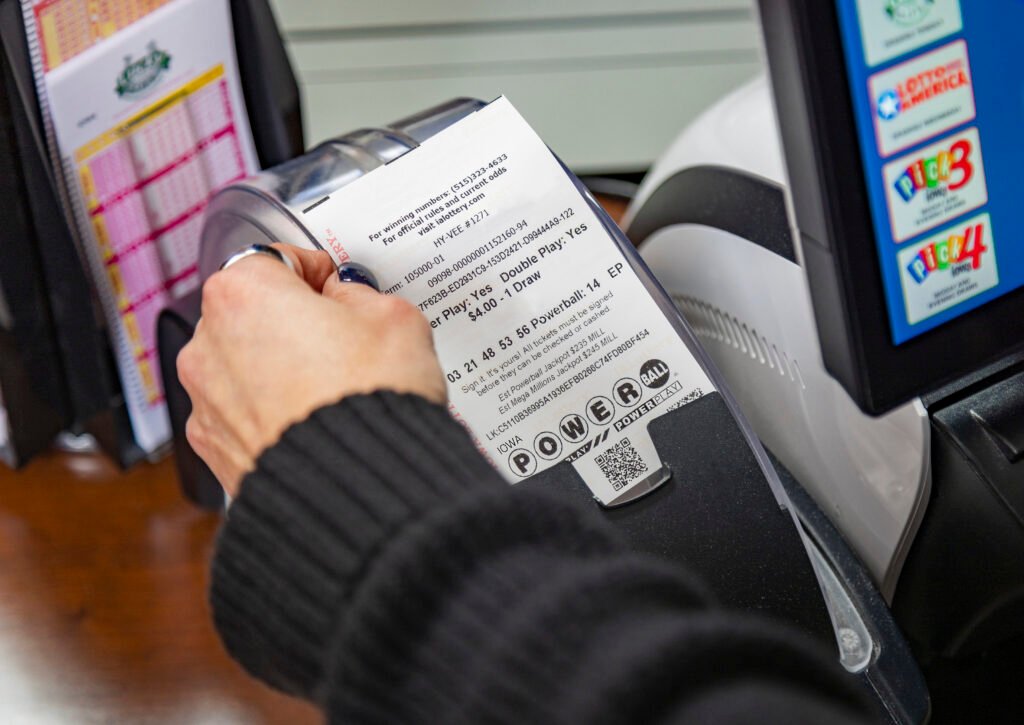
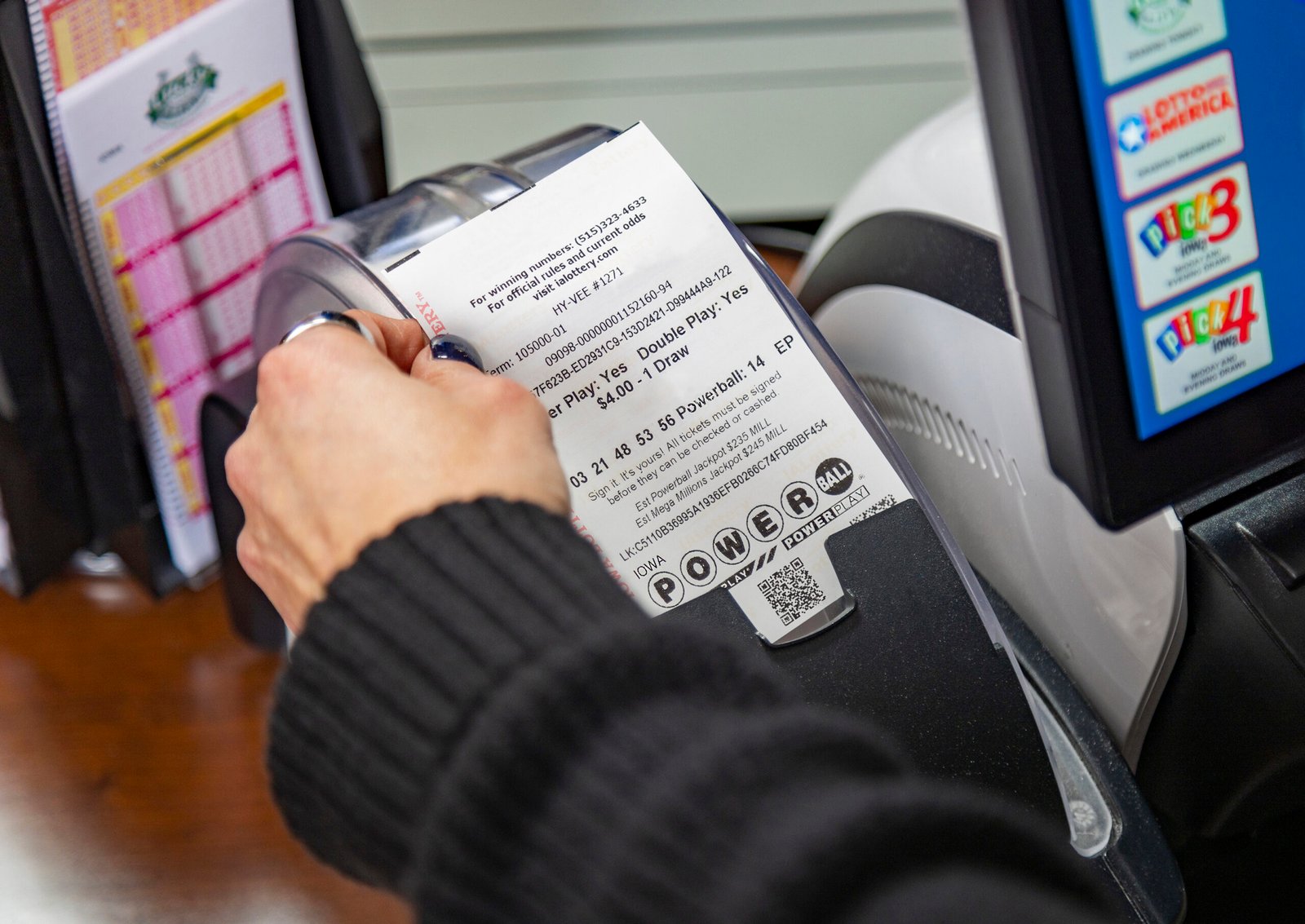
You cannot combine numbers from different lines on a Powerball ticket to create a winning play. Each line is a separate entry. The white numbers and red Powerball belonging to that line must be checked together against the same drawing. A ticket with several lines is a collection of entries, not one large selection from which you can assemble a result.
This is an easy mistake to make when a ticket contains many familiar numbers. You might notice three winning white numbers on line A, two more on line B, and the correct red number on line C. All six winning values are somewhere on the paper, but no single entry necessarily contains the required matches. The distinction matters before you use a prize chart, a calculator, or an online checker.
The official Powerball FAQ explicitly says plays are evaluated separately and numbers cannot be crisscrossed between lines or tickets. The examples below explain how to apply that rule without relying on ticket layout, color printing, or a quick visual scan.
Start with one complete entry
Imagine an illustrative drawing with white numbers 4, 18, 29, 46 and 61, and red Powerball 12. These are invented numbers for teaching, not a reported result. Your ticket has two entries. Line A reads 4, 18, 29, 50, 63 with Powerball 7. Line B reads 8, 20, 33, 46, 61 with Powerball 12.
Line A has three white matches and does not match the red ball. Line B has two white matches and does match the red ball. You must assess those as two separate match patterns. You cannot transfer 46 and 61 from line B into line A, or borrow line B’s Powerball to improve line A.
A useful written record would say “A: three white, red no” and “B: two white, red yes.” That record captures the information needed for the prize chart. Writing “five white numbers plus the Powerball somewhere on my ticket” loses the boundaries that define the actual entries.
Notice that separating the lines does not mean only one line can win. Several entries can qualify independently. The point is to preserve each entry’s identity all the way through checking, rather than combining their numbers into a more favorable pattern.
Why the paper ticket is not the unit of probability
The physical ticket is a receipt that can hold several plays. Its size, number of printed rows, or total purchase amount does not turn those rows into a single combination. In a simplified three-number game, an entry containing 1, 2 and 3 differs from an entry containing 4, 5 and 6. Printing them on one receipt does not automatically enter 1, 4 and 6.
You can see the issue by listing the combinations. Choosing three numbers from six produces 20 possible groups. Two purchased three-number entries cover two groups, assuming they are different. If combining numbers across the receipt were allowed, those two entries could incorrectly appear to cover all 20 groups. That would be a completely different game.
This small example explains the rule more clearly than a long list of prohibitions. Every valid play has a defined structure. Prize checking compares that structure with the result. The receipt organizes the plays, but it does not expand what was entered.
Our lottery odds calculator follows the same distinction for jackpot coverage. Its count of distinct combinations refers to complete entries, not the number of different individual labels appearing anywhere across your tickets.
White-ball order is a separate question
Checking within a line does not mean matching white numbers in their printed positions. For Powerball, white-ball matches are based on the numbers selected, not the order in which the balls appeared. A sorted result and a draw-order video can show the same white set in different sequences.
For example, 4, 18, 29, 46, 61 and 61, 29, 4, 46, 18 represent the same white-number selection. Moving those values around within their own white field changes the presentation, not the combination. Moving a value from another play into that field changes the entry and is not allowed.
The red Powerball remains its own field. If 12 appears as a white number in one line, that does not make it a red-ball match for that line. The field labels matter even when the numerical value is identical.
When checking a photograph, crop or enlarge one row at a time without removing the field labels. A close-up of six values can become misleading if the special ball’s location is no longer visible.
A repeatable checking routine
First confirm the game name and drawing date printed on the ticket. Then obtain the official result for that drawing. Put the white result numbers in one small list and the red result number in a separate box. This creates a stable reference before you inspect any entries.
Next read line A from left to right. Count its white matches, then check its own red number. Record those two facts. Move to line B and repeat from zero. Do not carry a running total of white matches from the previous row.
After every line has a match pattern, use the applicable prize table and any printed add-on information. A match pattern and a payout are different stages of the check. Combining them too early makes it easier to attach a multiplier or prize from the wrong row.
Finally, have a potentially winning ticket checked through the selling lottery’s authorized process. A manual comparison is a useful cross-check; it is not a replacement for validation. Keep the original ticket secure while resolving uncertainty.
Three mistakes that can look convincing
The first mistake is counting highlighted numbers across the entire page. If you circle every familiar number, the completed page may look impressive even though the circles belong to different plays. Add a row label to each note so your visual marks retain their meaning.
The second mistake is treating repeated numbers as extra matches. If a white number appears on five lines, it can contribute one match to each of those separate lines. It does not create five matches within one entry. Each line still has its own set of five white selections.
The third mistake is copying numbers into a checker without checking which row you copied. It is possible to enter the first three numbers from one row and the last two from the row below. The checker might accurately evaluate that invented combination, but it would not be evaluating your ticket.
A good safeguard is to read the copied entry back against the original before pressing check. Verify the first number, last white number, special ball, and date. Those four checkpoints catch many ordinary transcription mistakes.
What about several tickets or shared purchases?
The same principle applies when entries are spread across multiple receipts. A group of people may keep tickets together for administrative reasons, but that does not merge the selections. Each complete play must qualify independently under the game’s rules.
For a shared purchase, a simple checking sheet can have columns for ticket reference, line letter, draw date, white matches, special-ball match, and validation status. Use a private reference that helps the group distinguish receipts. There is no need to publish ticket barcodes or validation numbers.
This is a recordkeeping suggestion, not a substitute for an agreement about ownership or prize sharing. Those are separate matters. The narrow task here is ensuring that the group checks what was actually entered and can trace every claimed match back to a specific line.
The method also makes corrections easier. If someone copied line C incorrectly, you can fix line C without throwing away the entire check. Clear boundaries improve both accuracy and accountability.
A practice exercise
Use the invented winning white set 3, 11, 25, 42, 60 and special ball 9. Entry A is 3, 11, 25, 41, 59 with special ball 8. Entry B is 2, 10, 24, 42, 60 with special ball 9. Before reading further, write a match description for each entry.
Entry A has three white matches and no special-ball match. Entry B has two white matches and a special-ball match. Across the paper you can find all five winning white numbers and the correct special ball, but that does not create a jackpot entry.
Now change entry B’s white numbers to 3, 11, 25, 42, 60 while leaving its special ball at 9. Entry B now independently contains the complete winning combination. Nothing needs to be borrowed from entry A. That is the difference between a true complete match and a visual collection of matches.
Try the exercise again with the numbers in a different order. The answer should stay the same if the white set is unchanged and the special-ball field remains correct. This checks whether you understand both line boundaries and unordered white-number matching.
Questions readers often ask
Can I use the Powerball from the next line?
No. The special ball belongs to its own play. Borrowing it would create a combination that differs from the entry printed on that line.
Can two lines on one ticket both win?
They can qualify separately. Evaluate each entry against the applicable prize rules and have the ticket validated. Do not assume the receipt can produce only one qualifying line.
Does a ticket checker automatically know my rows?
Only if you use an official scanning process that reads the ticket appropriately. A manual number-entry tool evaluates the selections you provide. It cannot know that you accidentally mixed two rows.
What should I do if my manual check disagrees with a scan?
Recheck the game, drawing date, row boundaries, special ball, and any remaining drawings. Preserve the original and ask the selling lottery or an authorized retailer to resolve the discrepancy. Do not discard a ticket solely because one hurried check was confusing.
For a broader explanation of matching and prize tiers, see our Powerball odds and payouts guide. For entering a ticket manually, use the ticket checker carefully, one complete line and one eligible drawing at a time.
A second-person check that preserves the rows
If two people check a receipt together, give them different tasks. One person reads the official result and the other compares a single labeled entry. Then swap roles for a second pass. Reading the same mixed collection of circled numbers twice can repeat the same mistake; preserving the row label gives the second check something concrete to verify.
For a practice receipt, write three rows on separate pieces of paper. Put the result on a fourth sheet. Compare each entry without seeing the other two. Record its white count and special-ball result, then place the rows back together. Your answers should not change when the entries are reunited on one page.
This exercise tests the idea that a receipt is a container for entries. The layout can change while the underlying plays remain identical. A correct checking method should therefore give the same answer whether the lines appear on one sheet, several sheets or a carefully transcribed worksheet.
If your answer improves when you can see more rows at once, inspect whether you are borrowing numbers across boundaries. More purchased entries can provide more separate opportunities, but they cannot rewrite an individual line after the result is known. Finish each line’s comparison before moving to its payout, and keep unresolved rows marked as unresolved.
Browse all ticket-checking and probability guides in the Lottery Learning Library.
Sources and further reading
Reviewed October 18, 2026. Examples are illustrative unless identified otherwise. Winning Numbers Today is an independent information website; the selling lottery validates tickets and pays prizes.