Powerball and Double Play use separate drawing results. If your ticket includes Double Play, its selected numbers are checked against the main Powerball drawing and separately against the Double Play drawing. You must not combine white numbers from one drawing with the red number from the other.
The similar names and shared selections can make two different result pages look interchangeable. They are not. A ticket’s eligibility, the drawing identity and the applicable prize table must all line up before a match means anything.
This guide focuses on checking an existing ticket accurately. It does not recommend buying an add-on or describe a way to improve number selection. Every numerical ticket example below is invented to demonstrate the checking process.
First establish whether the ticket includes Double Play
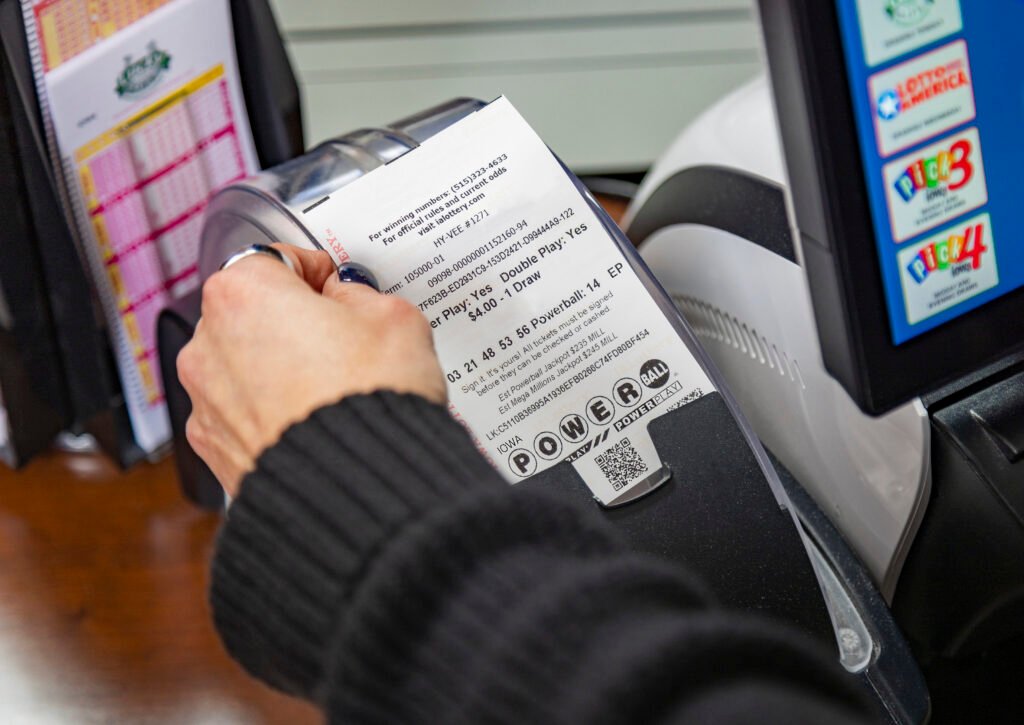
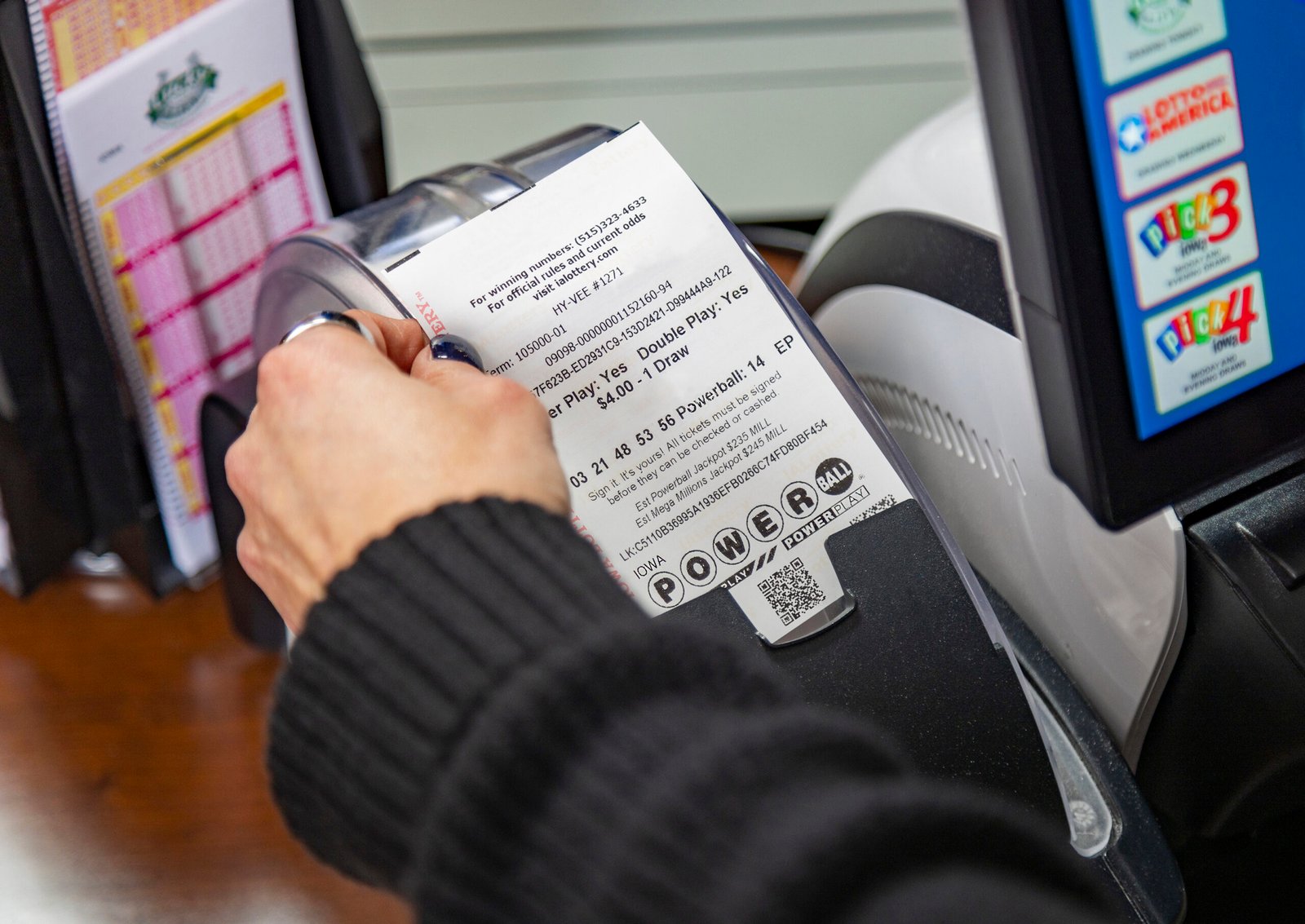
Double Play is an optional feature offered in participating jurisdictions. The official Powerball explanation says it enters the same selected numbers into a separate drawing. A standard Powerball entry does not automatically become a Double Play entry just because its numbers happen to match that result.
Read the ticket’s printed features rather than assuming that a higher total price proves what was purchased. A receipt may contain several plays, several drawings or another feature. Those possibilities can produce similar totals while representing different entries.
If the feature label is unclear, ask the selling retailer or lottery to interpret the original ticket. Do not attempt to infer eligibility from a screenshot of winning numbers or from another person’s ticket purchased elsewhere.
The purpose of this first check is to avoid a particularly frustrating error: finding a match in a drawing that the ticket never entered. Eligibility comes before comparison, not after discovering an attractive result.
Keep two result records
For a ticket that includes both drawings, create two clearly labeled result records for the same drawing date. One should say main Powerball; the other should say Double Play. Keep each record’s five white numbers and special ball together.
Suppose the illustrative main result is white 3, 17, 28, 49, 64 and red 8. The illustrative Double Play result is white 6, 19, 31, 45, 62 and red 14. A ticket line reads white 3, 17, 31, 45, 62 and red 14.
Against the main result, that line has two white matches and no red match. Against the Double Play result, it has three white matches and a red match. Those are separate descriptions for separate drawings.
You cannot count 3 and 17 from the main result together with 31, 45 and 62 from Double Play. That would manufacture a five-white match that occurred in neither drawing.
Same selections do not mean the same outcome
Using one selection in two drawings is like submitting the same answer sheet to two different questions. The entry remains the same, but the result against which it is evaluated changes. A successful match in one drawing says nothing automatic about the other.
The official Double Play page states that eligible tickets can win in both drawings. They can also qualify in one and not the other, or in neither. Checking only the main result therefore leaves part of an eligible ticket unchecked.
This does not mean you can predict the second result from the first. A repeated label between the two result sets can happen without creating a useful forecasting rule. Each comparison must use the full result for its own drawing.
A clear worksheet makes the distinction visible. Put the ticket line once at the top, then create separate rows for main-draw matches and Double Play matches. Record the date on both rows to prevent accidental mixing with an older result.
Power Play is another distinct feature
Power Play and Double Play are easy to confuse because both names contain “Play.” Power Play concerns specified non-jackpot prizes in the main game. Double Play concerns an additional drawing.
The official Double Play instructions say the Power Play multiplier does not apply to Double Play prizes. Therefore, seeing a Power Play value beside the main result is not a reason to multiply a Double Play payout by that value.
A hypothetical example illustrates the reading mistake. Suppose a separate-draw prize were displayed as $100, and the main result showed a 3X Power Play value. Multiplying the separate-draw amount to $300 would be unsupported simply because the two pieces of information appeared on the same evening.
Always identify which feature a number belongs to. Result numbers, multipliers, jackpot estimates and prize values are different kinds of information. Their visual proximity on a website does not establish a mathematical relationship.
Choose the prize table after identifying the drawing
A match pattern such as “three white plus special ball” is not a universal dollar amount across all lottery games. The same pattern can have different payouts in different prize schedules.
For an eligible Double Play entry, use the Double Play prize table. For the main entry, use the main Powerball table and any applicable main-game feature. Do not select whichever table shows the larger number.
The official Double Play page describes a separate top cash prize of $10 million. That is different from the main game’s advertised rolling jackpot. A complete Double Play match should not be labeled as winning the main advertised jackpot.
For exact amounts, use the current official table and the selling lottery’s rules. This article’s role is to help you select the right table and preserve the identity of the entry through the checking process.
Check the date even when the results are adjacent
Websites often show the latest main result and latest additional-draw result in nearby panels. During an update, those panels may not necessarily be refreshed at the same moment. Read each date instead of assuming neighboring cards represent the same session.
A saved screenshot presents another problem. The screenshot may have been accurate when captured but belong to a different drawing than your ticket. “Latest” is a relative label; a calendar date is a much stronger reference.
If the draw occurs near midnight in your location, your phone’s local date may differ from the operator’s drawing label. Match the ticket to the operator’s stated draw date, not simply to the day on which you opened the page.
Our draw schedule can help orient you, but the ticket and official drawing record determine which result you should use. A schedule alone does not establish that a particular ticket entered a drawing.
A complete checking example
Imagine a receipt with two eligible lines, A and B, for one date. Make four checking rows: A against main, A against Double Play, B against main, and B against Double Play. That structure prevents you from accidentally stopping after two comparisons.
For each row, record the white-match count and whether the special ball matched. Only after those four match descriptions are complete should you consult the relevant prize schedule. This keeps a potential payout from influencing the number comparison.
If the ticket covers several dates, repeat those four comparisons for each eligible date. Two lines across three dates and two drawing types create twelve line-and-drawing comparisons, assuming both features apply throughout the printed coverage.
That arithmetic counts checking tasks, not guaranteed chances of a particular prize or independent payout events. Some outcomes across entries can be related because the entries share numbers. A checklist is an organizational tool, not a probability formula.
What if only one result is available?
An unavailable result is not the same as a losing result. If the official source has not yet posted the relevant drawing, keep the ticket and return to that source when the result is available.
Do not fill an empty Double Play panel with the main Powerball numbers. Do not reuse the previous Double Play result because it is the only one visible. Both shortcuts replace missing information with information about a different event.
If a third-party site shows a result before the official operator, treat the operator’s record as the authority for resolving a potential prize. A reporting delay does not change the selections printed on your ticket or justify reconstructing an outcome yourself.
Our article on pending lottery results explains the broader difference between unavailable information and a confirmed zero. That distinction is useful whenever result pages update in stages.
Protect the ticket while resolving a discrepancy
If you find a possible match, preserve the original and use the selling lottery’s checking process. Keep your worksheet as a note, but do not treat it as the claim document.
Avoid sharing a full barcode or validation area publicly when asking for help. You can describe the game, drawing date and field confusion without publishing every identifying feature of the ticket.
If an authorized check differs from your manual comparison, review eligibility, drawing type, date, row boundaries and prize-table choice. Those are more productive first checks than assuming the computer or drawing must be wrong.
A clear question helps support staff: “This ticket appears to include Double Play for this date; can you confirm which result and prize table apply?” That is easier to resolve than an unlabeled list of six numbers.
A final self-test
Before putting an eligible ticket away, ask whether you checked both drawings, whether every result carried the correct date, and whether each line remained intact. Then ask whether any multiplier was attached to the correct feature.
If the answer to one question is uncertain, leave that item marked unresolved rather than writing “no win.” A short unresolved list is safer than a confident conclusion built on an assumption.
For the main-game background, read how Powerball works. For current main results, visit Powerball results. For Double Play, use the official page linked below and the selling lottery’s information.
The central checking rule is to keep each drawing separate from beginning to end. Shared selections do not merge results, eligibility does not transfer between features, and a multiplier from one feature does not belong to another.
Use a two-column results card
A practical way to avoid mixing drawings is to make a results card with two columns. Put the main-game name above the first and Double Play above the second. Repeat the date and field labels in both columns rather than relying on one heading across the page.
Under each result, leave space for every ticket line. Record the match pattern in the relevant column, then add a separate validation-status note. The same line can have different notes in the two columns because it is being compared with different outcomes.
If one drawing’s information is unavailable, leave that column explicitly pending. Do not copy the completed column across merely to fill the empty space. An incomplete card accurately represents an incomplete check.
For a multi-date ticket, make a fresh card for each eligible date. This prevents a result from an earlier session from drifting into a later one when screenshots or browser tabs are open together.
The card is only a private organizational aid. It should not contain a public barcode image, and it does not replace the ticket. Its value is that it forces every match description to carry a drawing name and date. Those two labels are the quickest defense against a convincing-looking comparison with the wrong result.
Browse all ticket-checking and probability guides in the Lottery Learning Library.
Sources and further reading
Reviewed October 18, 2026. Examples are illustrative unless identified otherwise. Winning Numbers Today is an independent information website; the selling lottery validates tickets and pays prizes.