
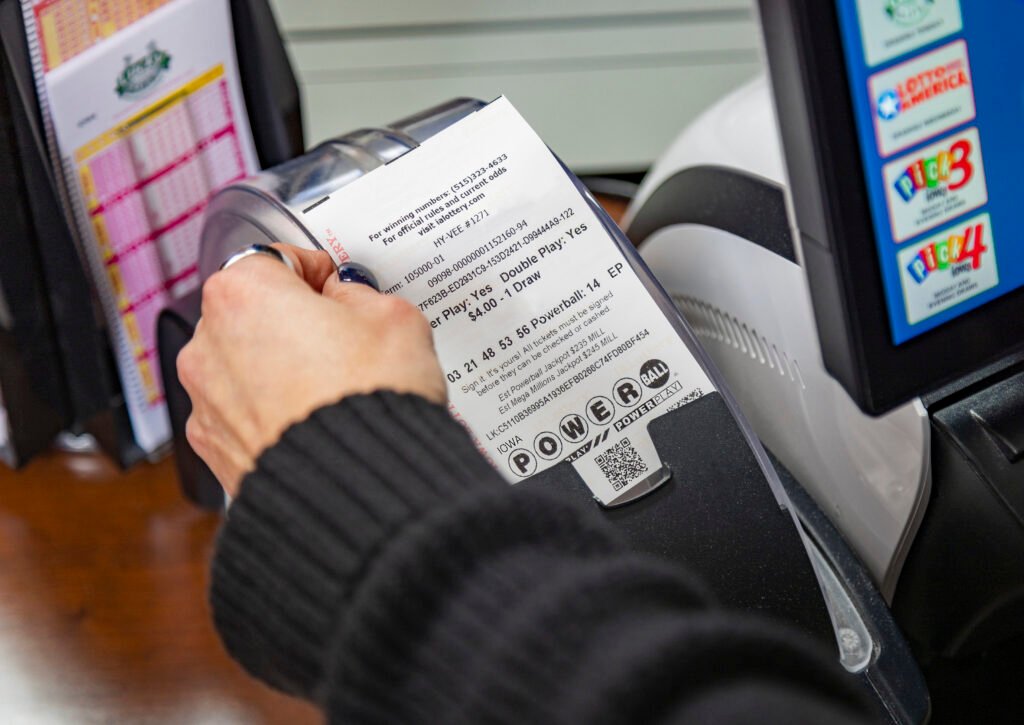
Two entries with the same five white numbers but different red Powerballs are different complete combinations. Each covers a different possible jackpot result. Under the fair uniform model, two such distinct entries cover two jackpot outcomes, just as any two different complete entries do.
That does not mean the entries behave independently for partial matches. Their white-number outcomes are identical because they share the same white set. The difference between jackpot coverage and shared partial-match behavior is important.
This article explains the counting, uses a small model to make it visible, and describes what happens if a collection covers several special-ball values while keeping the main numbers fixed.
Define a complete combination
For a game with a main-number set and a separate special ball, a complete entry includes both fields. Changing either field changes the complete combination.
For example, white numbers 4, 18, 29, 46, 61 with special ball 7 is different from the same white set with special ball 12. The white field is identical, but the complete outcomes are not.
Changing the order of those white labels does not create a new combination when the game ignores main-number order. White 61, 29, 4, 46, 18 with special ball 7 is the same complete entry as the first example.
A duplicate checker must therefore sort or otherwise normalize the white set while preserving the special-ball field. Comparing only the white numbers would incorrectly mark the second entry as a complete duplicate.
Count the total outcome space
If the main field chooses k labels from n and the independent special field contains b labels, there are M = C(n,k)×b possible complete results.
A fixed main set with one special-ball value covers one of those M outcomes. The same main set with u different special values covers u outcomes, provided u does not exceed b.
The one-draw jackpot probability is therefore u/M. This is a count of distinct complete combinations, not a claim that the entries are independent.
In fact, jackpot events for different complete entries in the same drawing are mutually exclusive: the draw produces only one complete result. Adding their probabilities is valid because those jackpot events cannot occur together.
A tiny model you can inspect
Imagine a game selecting two main labels from 1 through 5 and one special label from A, B and C. There are C(5,2)×3 = 30 complete outcomes.
Suppose you choose main set 1–2 with special A, and main set 1–2 with special B. Those entries cover two outcomes, giving a complete-match probability of 2/30.
Now compare a second collection: main 1–2/special A and main 3–4/special C. It also covers two outcomes and has the same 2/30 complete-match probability.
The collections have different relationships among their partial matches. But for the narrow question of whether either complete entry matches the single draw, they cover the same number of equally likely outcomes.
What happens if every special label is covered?
In the small model, choosing main set 1–2 with A, B and C covers all three special outcomes for that main set. The complete-match probability becomes 3/30, or 1/10.
That is exactly the probability that the main result is 1–2. Covering the special field removes uncertainty about that field only if the selected main set matches.
For the current five-from-69 and one-from-26 format, covering all 26 special values with one fixed main set would produce probability 1/C(69,5), or 1 in 11,238,513, of a complete match.
That remains an extremely small probability. It is not a guaranteed jackpot, because the main field still has more than eleven million possible sets. This is a mathematical illustration, not a recommendation to buy that collection of entries.
A conditional guarantee is not an unconditional guarantee
The statement “one special ball must match” can be true for a collection that covers every special label. But that statement concerns only the special field.
The statement “one complete entry must match” would require the main field to match as well. If the main set is wrong, covering every special label does not repair it.
A useful way to read any guarantee is to finish the sentence: guaranteed what, under which condition, and for which field? Leaving out the condition can turn a true limited statement into a misleading broad promise.
This distinction also appears in lottery wheels. A design can guarantee a certain overlap if enough chosen labels appear, without guaranteeing that those labels will be drawn.
Why the partial-match results are linked
When entries share the same main set, they all have the same number of main matches in a drawing. If that set matches two main labels, every entry in the collection has two main matches.
Their special-ball comparisons differ because the special selections differ. At most one of a collection of distinct special labels matches the one drawn special label.
This creates a structured relationship among the entries. It would be wrong to calculate their partial-match outcomes as though each entry had an independent main draw.
For a jackpot-only coverage calculation, that dependence is handled by counting distinct complete outcomes. For “any prize” or total payout questions, the joint structure and prize rules require additional analysis.
Distinct labels are not the same as distinct entries
A collection can reuse many individual labels and still contain different complete combinations. Conversely, a collection can look different because its white numbers are printed in a different order while actually repeating the same entry.
Consider white set 2, 13, 24, 45, 66 with special 9, and white set 66, 45, 24, 13, 2 with special 9. These are the same complete combination in an unordered-main game.
Now change only the special value to 10. The complete entry is different even though all five white labels are unchanged.
This is why a useful coverage count operates on normalized complete entries. Counting unique individual numbers anywhere on a receipt does not measure jackpot coverage.
A practical duplicate-checking method
Create a record for each game, draw date and line. Sort the main labels numerically, then append the special field in a clearly separated position.
For example, an internal comparison key could be “4-18-29-46-61 | PB12.” The separator matters because it prevents the special value from being mixed into the main set.
Compare keys only within the same game format and drawing. The same combination entered on two different dates is not a duplicate for the purpose of one-draw coverage; it is one entry in each of two events.
Do not publish ticket identifiers alongside these records. The number selections are enough for the mathematical comparison, while ticket ownership and validation information should remain private.
How to use the odds calculator
In our lottery odds calculator, the distinct-combination count should include complete entries. Two identical white sets with different special values count as two distinct combinations for the same drawing.
Two copies with the same white set and the same special value count as one covered jackpot outcome. Their possible payout treatment is separate from the probability of covering that outcome.
Use the one-draw scenario for entries in the same drawing. Do not describe several special values in one draw as several independent drawings; that uses a different probability model.
The calculator focuses on complete jackpot matches. It does not determine the distribution of smaller prizes for a collection with shared main selections, nor does it validate whether the entries were actually purchased.
A comparison exercise
Return to the two-from-five, three-special-label model. Collection A contains 1–2/A, 1–2/B and 1–2/C. Collection B contains 1–2/A, 2–3/B and 4–5/C.
Each collection covers three of the 30 complete outcomes, so each has a 10% complete-match probability. But collection A’s main-match count is identical across all three entries in every drawing.
Collection B’s main-match counts can differ because its main sets differ. A drawing with main set 1–2 gives one line a complete main match while the other lines have different overlaps.
The exercise shows why “same jackpot coverage” does not mean “same prize distribution.” A narrow equality should not be expanded into a claim that every feature of two entry collections is equivalent.
Questions readers often ask
Does changing only the special ball increase coverage?
Yes, if the new complete entry was not already represented in the same drawing. It adds one distinct jackpot outcome. The resulting probability can still be extremely small.
Does it make the white numbers more likely?
No. The main set’s probability is unchanged. You have added another special-field possibility attached to that set.
Can I combine special balls from different lines?
No. Each complete entry is checked as printed. A collection covers its actual combinations, not every combination that could be assembled by mixing fields.
Is this better than using different white sets?
For jackpot probability alone, equal numbers of distinct complete entries cover equal numbers of outcomes in the uniform model. Other questions require separate analysis, and this article does not recommend a purchasing strategy.
For the basic matching rules, see why numbers cannot be combined across lines. For field-specific confusion, see red versus white number matches.
The essential habit is to count complete entries accurately. Shared white numbers do not make different special-ball entries identical, and covering a special field does not guarantee the much harder main-field match.
Do not multiply the main-field probability twice
A common calculation error occurs when a collection shares one main set. Someone first calculates the main-match probability, then multiplies by a separate main-match probability for every special-ball entry.
That does not describe the collection. All those entries share the same main-match event. The main set either matches the drawing or it does not; it is not independently redrawn for each line.
In the two-from-five teaching model, the main set 1–2 has probability one tenth. Covering two of three special labels gives a conditional special-field coverage of two thirds. Multiplying one tenth by two thirds gives two thirtieths, the same answer as counting complete outcomes directly.
If all three special labels are covered, the conditional special coverage becomes one. The result is one tenth, not three separate independent main-match attempts.
This conditional calculation is a useful second method for checking the direct count. Both should agree when the model is specified consistently.
For a collection with several different main sets and varying special coverage, group entries by main set and count the distinct special values attached to each. Add those complete-outcome counts, removing duplicates. The resulting total is the coverage used for the one-draw jackpot calculation.
Browse all ticket-checking and probability guides in the Lottery Learning Library.
Sources and further reading
Reviewed October 18, 2026. Examples are illustrative unless identified otherwise. Winning Numbers Today is an independent information website; the selling lottery validates tickets and pays prizes.