
Do You Pay Taxes on Lottery Winnings?
You’ve hit a jackpot — but do you pay taxes on lottery winnings? Yes. Lottery winnings are ordinary taxable income, and both federal and possibly state taxes apply. Here’s what every winner should know before claiming.
Lottery Winnings & Taxes — Key Facts
- Lottery winnings count as taxable income at the federal level.
- Federal tax is typically withheld automatically from large prizes before you receive them.
- State taxes vary widely — some states tax lottery winnings, others don’t tax them at all.
- Choosing annuity vs lump sum can change when the tax bill hits, not whether it exists.
This is general information, not tax advice. Always consult a qualified tax professional about your specific situation.
Check the latest Powerball results and Mega Millions results — and read on to understand what you’d owe if you won.
Federal taxes
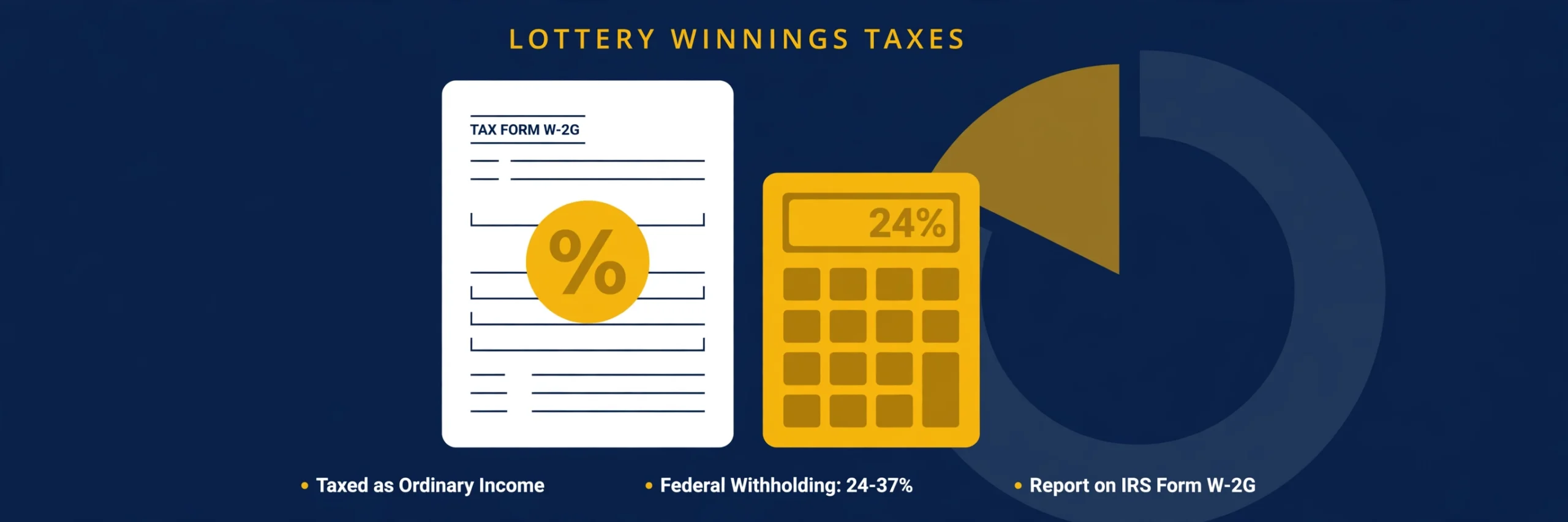
Lottery winnings are ordinary taxable income. The IRS automatically withholds 24% of prizes of $5,000 or more before you are paid. A jackpot win puts you in the top federal bracket (37%), so the 24% withholding usually does not cover the full bill — you pay the rest when you file.
State taxes
State taxes vary by state. States with no state tax on lottery winnings include California, Florida, Texas, Washington, Wyoming, Tennessee, South Dakota and New Hampshire. Among states that do tax, New York is highest at 10.9% withholding, followed by New Jersey (10.75%), Oregon (9.9%), Minnesota (9.85%) and Maryland (8.95%). Arizona and Maryland also tax non-residents’ winnings.
Annuity vs lump sum and taxes
Each annuity payment is taxed in the year you receive it; the lump sum is taxed all at once in the year you claim. This is general information only, not tax advice — consult a tax professional before claiming a prize.
Frequently Asked Questions
How much tax do you pay on lottery winnings?
Federally, 24% is withheld on prizes of $5,000 or more, but jackpot winners typically owe up to the 37% top bracket, plus any state taxes where they live.
Do all states tax lottery winnings?
No — states including California, Florida, Texas, Washington, Wyoming, Tennessee, South Dakota and New Hampshire do not tax lottery winnings, while others like New York (10.9%) tax them heavily.
Are annuity payments taxed differently from lump sum?
The tax rates are the same; the difference is timing — each annuity payment is taxed in the year received, while the lump sum is taxed all in the year you claim.